
Univ.-Prof. Dr. Andrii Chumak
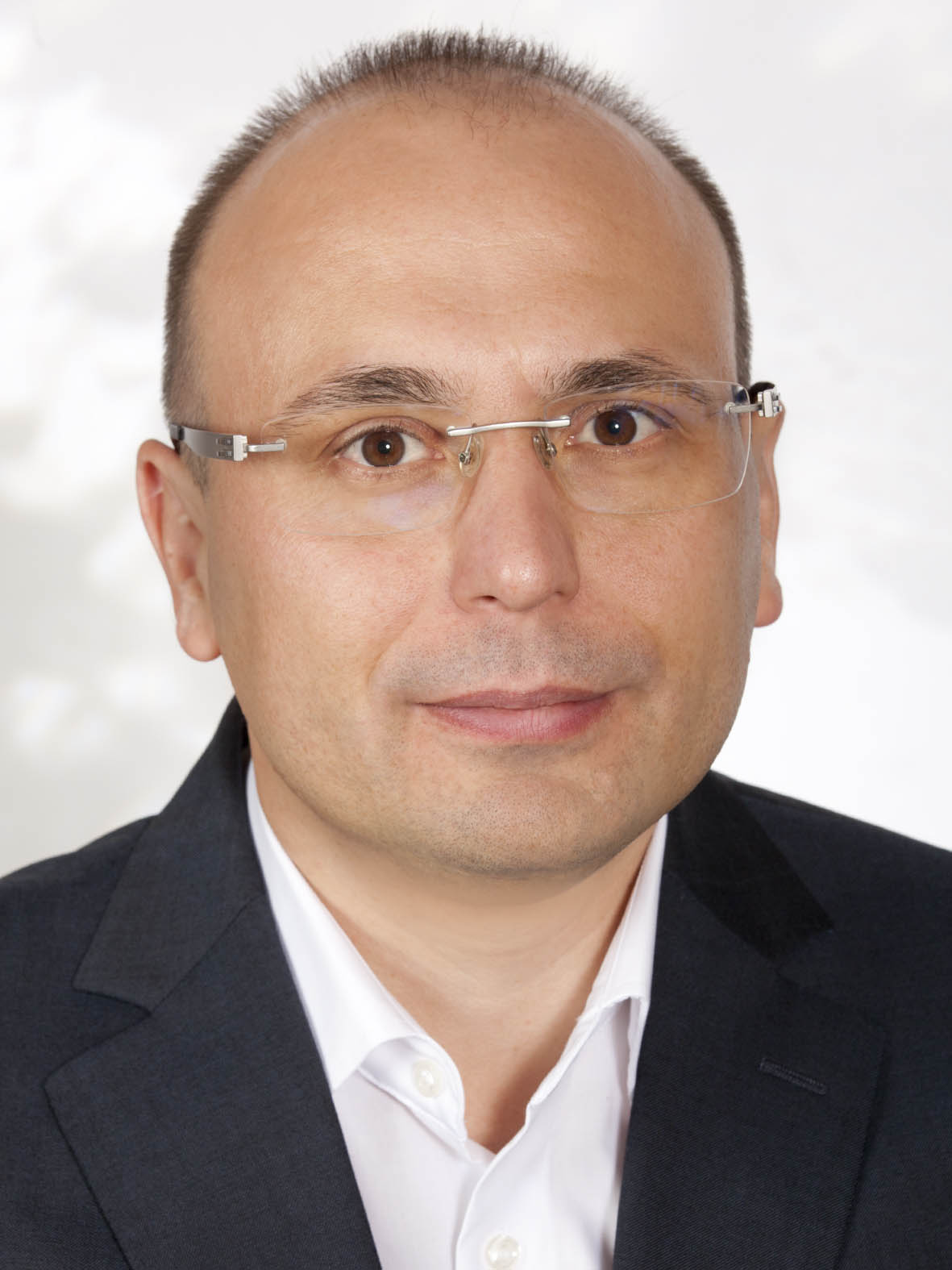
Univ.-Prof. Dr. Andrii Chumak
Head of the Group
Faculty of Physics, University of Vienna
Boltzmanngasse 5, room: 3314
A-1090 Vienna, Austria
Phone: +43-1-4277-739-10
Mobile: +43-664-60277-73910
E-mail: andrii.chumak(at)univie.ac.at
Researcher unique identifier: N-1395-2013
Google Scholar: Andrii V. Chumak
ORCID: 0000-0001-5515-0848
Scopus ID: 8219595500
Short bio
Andrii Chumak is a Full Professor of Experimental Solid State Physics and the Head of the Nanomagnetism and Magnonics Research Unit at the Faculty of Physics, University of Vienna.
After studying physics at the Taras Shevchenko National University of Kiev from 1999-2005, Dr. Chumak wrote his PhD thesis on parametric processes of spin waves and received his PhD from the university’s Faculty of Radiophysics in 2009. In 2004, he worked as a visiting scientist at the Department of Physics at Colorado State University. After receiving his PhD, Dr. Chumak continued his research at the Department of Physics at the Technical University of Kaiserslautern as a postdoctoral researcher and became a Principal Investigator in 2011 to study magnonic crystals and spin-orbit phenomena. In 2016, Dr. Chumak habilitated at TU Kaiserslautern, received the prestigious ERC Starting Grant "Magnonic Nano-Circuits for Novel Computer Systems”, and continued his research as Junior Professor and Head of the ERC Young Investigator Group in Kaiserslautern.
In 2019, Dr. Chumak was appointed University Professor and Head of the Nanomagnetism and Magnonics Research Unit at the Faculty of Physics, University of Vienna. His group, comprising around fifteen researchers at various academic stages, explores a wide range of topics in magnetism, including quantum magnonics, unconventional computing, and spintronics. A. Chumak has authored over 100 publications in high-impact international journals and has served as the principal investigator in more than ten European and national research projects.
Main scientific interests
Magnetization dynamics, magnonics and RF applications
Nano-scale exchange magnonics, nonuniform and nonstationary systems, magnonic crystals
Nonlinear wave physics
Parametric instability, multi-magnon scattering, wave-front reversal
Unconventional computing
Inverse-design magnonics, Boolean spin-wave logic, neuromorphic computing, rf applications
Quantum magnonics
Magnon fluxonics, entangled magnon states @ mK, Bose-Einstein condensation @ RT
Magnon spintronics
Spin pumping, spin transfer torque (STT), spin Hall effect (SHE), spin Seebeck effect (SSE)
List of invited talks and lectures
- Spin waves for novel information systems
A.V. Chumak
School on Magnetism and Spintronics, December 2-4, 2024, IIT Kanppur, India (online) - Magnon transport in YIG/GGG at millikelvin temperatures for quantum magnonics
A. V. Chumak
"Magnons on an island 2024”, September 17th – 20th, 2024, Texel, The Netherlands. - Magnonic inverse-design processor
A. V. Chumak
Nanomaterials: Applications & Propertiesn (IEEE NAP-2022), September 8th – 13th, 2024, Riga, Latvia. - Universal magnonic machine-learning module
A.V. Chumak
International Conference on Magnetism 2024, June 30th – July 5th, 2024, Bologna, Italy - Magnon transport in YIG/GGG at millikelvin temperatures for quantum magnonics
A.V. Chumak
SPICE Workshop on Quantum Spinoptics in 3D, June 17th – 20th, 2024, Ingelheim, Germany - Introduction to computing with spin waves
A.V. Chumak
21st IUVSTA Summer School on Physics at Nanoscale, June 3-7, 2024, Skalský Dvůr, Czech Republic - Spin waves for novel information systems
A.V. Chumak
21st IUVSTA Summer School on Physics at Nanoscale, June 3-7, 2024, Skalský Dvůr, Czech Republic - Spin waves for novel information systems
A.V. Chumak
Workshop on magonics and spintronics, May 27-28, 2024, Wuhan, China - Magnon transport in YIG/GGG at millikelvin temperatures for quantum magnonics
A.V. Chumak
The 13th international workshop on Spin Caloritronics, May 20-24, 2024, Beijing, China - Magnon transport in YIG/GGG at millikelvin temperatures for quantum magnonics
A.V. Chumak
IEEE International Magnetics Conference (INTERMAG 2024), May 5-10, 2024, Rio de Janeiro, Brazil - 3D and inverse-design magnonics
A.V. Chumak
SPICE Workshop on Nanomagnetism in 3D, April 30th - May 2nd, 2024, Ingelheim, Germany - Magnon transport in YIG/GGG at millikelvin temperatures
A.V. Chumak
Nanomaterials: Applications & Properties (NAP 2023), Sep. 10-15, 2023, Bratislava, Slovakia - Magnon transport in YIG/GGG at millikelvin temperatures
A.V. Chumak
Physics of Magnetism 2023 (PM'23), June 26-30 in Poznań, Poland - Magnonics and magnetization dynamics
A.V. Chumak
2023 IEEE Magnetics Society Summer School, Bari - Carovigno, Italy, 11-16 June 2023 - Linear and non-linear out-of-plane nano-magnonics for data processing
A.V. Chumak
Exploring New Paths towards High-Density and Agile Future-Generation RF Modules, 12 June 2023, Stockholm, Sweden - Magnon transport in YIG/GGG at millikelvin temperatures
A.V. Chumak
Spin Caloritronics XII, 22-25 May 2023, Tsukuba, Japan - Propagating spin-wave spectroscopy in nanometer-thick YIG films at millikelvin temperature
A.V. Chumak
Spin Cavitronics IV Workshop, 7-9 December 2022, Erlangen, Germany - Out-of-plane nano-magnonics & SW RF applications
A.V. Chumak
Huawei Workshop “Innovations and Applications of Magnetic Materials in RF&MW”, 24-25 October 2022, Stockholm, Sweden - Linear and non-linear out-of-plane nano-magnonics
A.V. Chumak
IEEE International Conference “Nanomaterials: Applications & Properties” (IEEE NAP-2022), 11-16 September 2022, Kraków, Poland - Out-of-plane nano-magnonics
A.V. Chumak
CMD29, 21-26 August 2022, Manchester, UK - Out-of-plane nano-magnonics
A.V. Chumak
7th Conference in Magnonics, 31 July – 4 August 2022, Oxnard, California, USA - Introduction to computing with spin waves (invited lecture)
A.V. Chumak
4th International Advanced School on Magnonics 2022 (IASM’2022), 18-22 July 2022, Porto, Portugal - Out-of-plane nano-magnonics
A.V. Chumak
International Conference on Microwave Magnetics (ICMM 2022), 19-22 June 2022, Beijing (online), China - Advances in Millikelvin- and Nano-Magnonics
A.V. Chumak
Quantum Spintronics 2022 International Conference, 13-15 June 2022, Trondheim, Norway - Magnon-based data processing
International conference on microwaves, communications, antennas, biomedical engineering & electronic systems (COMCAS 2021), 1-3 November 2021, Tel Aviv, Israel - Nanoscale spin-wave directional coupler for all-magnon circuits
7th International Conference on Superconductivity and Magnetism, 21-27 October 2021, Bodrum, Turkey - Inverse-design magnonics
Hybrid Kavli ITS-IOP 2021 Workshop on “Multidisciplinary Spintronics”, 10-15 October 2021, Beijing, China (online) - Inverse-design magnonics
10th International Conference on “Nanomaterials: Applications & Properties” (NAP-2021), 5-11 September 2021, Odesa, Ukraine - Inverse-design magnonics
EPSRC International Network for Spintronics Meeting (EPSRC 2021), online, June 7-9, 2021 - Spin-wave data processing in YIG nanostructures
Magnetism and Magnetic Materials Conference (MMM 2020), online, November 2-6, 2020 - Towards magnonic neuromorphic computing
Workshop on Magnonics Applications, February 20-21, 2020, Budapest, Hungary - Nano-structured Yttrium Iron Garnet for data processing
12th International Conference on Ferrites (ICF 12), October 29 – November 1, 2019, Boston, USA (talk was given online)
List of invited seminars
- Spin waves for novel information systems
Faculty Colloquium, Martin-Luther-University Halle-Wittenberg, April 20th, 2023 - Spin waves for novel information systems
Antrittsvorlesung, University of Vienna, March 15th, 2023 - Magnon-based data processing
American University of Beirut, Lebanon, Online, March 3rd, 2022 - Magnon-based data processing
Special Seminar for Sumy State University, Ukraine, Online, May 24th, 2021 - Nano-Magnonics: From Room to Cryogenic Temperatures
Spin+X Distinguished Lectures series, Online, April 19th, 2021 - Spin-wave data processing
CEITEC, Brno, Czech Republic, February 27th, 2020